
Our Unique Approach
Why Disc Injuries Require a Comprehensive Approach
Disc injuries—such as bulging, herniated, or degenerated discs—are rarely caused by a single problem. Over time, spinal compression, joint dysfunction, and muscle scarring create abnormal stress on the discs, limiting their ability to heal and often leading to chronic pain or nerve irritation.
Because multiple systems are involved, effective care must address the discs themselves, the surrounding muscles, and the joints that control spinal movement. Our approach is designed to treat each of these components in a coordinated and intentional way.
A Thoughtful, Problem-Focused Care Model
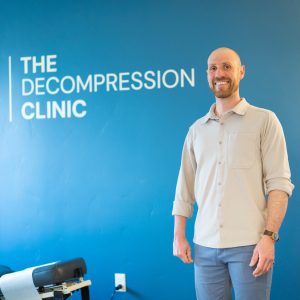
Dr. Jacob is trained in a variety of chiropractic and rehabilitative techniques and uses a blend of modalities based on each patient’s individual needs. He recognizes that patients come into his treatment room because their health—and their ability to pursue what brings them joy—has been compromised.
While Dr. Jacob values building strong relationships with his patients, his care philosophy is intentionally problem-focused. Everything begins with a thorough examination, followed by patient education so you clearly understand your condition, the proposed treatment, and what to expect moving forward.
Dr. Jacob only accepts cases he believes his skills are best suited for. If a referral to another provider is the most appropriate course of action, he has spent years cultivating relationships with trusted practitioners and will not hesitate to refer when necessary.
How We Address Disc Injuries
Spinal Decompression Therapy — Treating the Disc Itself
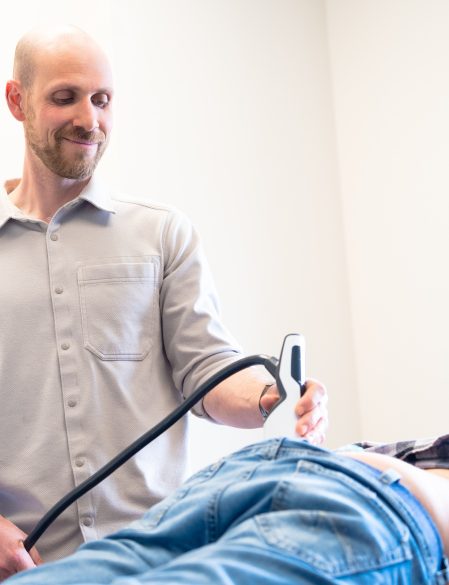
Spinal decompression therapy is used to directly reduce pressure within injured discs. By gently and precisely stretching the spine, decompression helps relieve nerve compression and supports the movement of fluids and nutrients into the disc, which is essential for healing.
Shockwave Therapy — Treating Muscle Scarring & Inflammation
Disc injuries are often accompanied by chronic muscle tension, scar tissue, and inflammation that hold the spine in a compressed state. These muscular restrictions can prevent decompression from holding long term. Shockwave therapy helps break down scar tissue, reduce inflammation, and improve circulation in the muscles that support the spine—allowing the spine to move more freely and maintain decompression.
Manual Therapy & Chiropractic Adjustments — Treating Joint Dysfunction
Joint restrictions and dysfunctions alter normal spinal movement and place additional stress on injured discs. Manual therapy and precise chiropractic adjustments restore proper joint motion, improve alignment, and help normalize how forces are distributed throughout the spine.
Corrective Exercises — Creating Lasting Stability
To achieve long-term results, corrective exercises are used to improve spinal stability and retrain inappropriate movement patterns. This helps patients maintain progress, reduce the risk of re-injury, and return to daily activities with greater confidence.
Concerns We Address
|
Feature
|
Concerns We Address
|
|||||
|---|---|---|---|---|---|---|
|
Spinal Decompression Therapy
|
Disc compression
|
Herniation or bulging
|
Nerve irritation
|
|||
|
Shockwave Therapy
|
Muscle scarring
|
Chronic inflammation
|
Persistent spinal compression
|
|||
|
Manual Therapy & Chiropractic Adjustments
|
Joint restrictions
|
Abnormal spinal mechanics
|
Ongoing stress on discs
|
|||
|
Corrective Exercises
|
Muscle weakness
|
Poor movement patterns
|
Long-term spinal stability
|
|||
Our Goal
Our goal is not to keep patients in ongoing care, but to help them return to doing what they love with a spine that functions better, moves better, and remains resilient over time.