
Proper Spinal Alignment: The Key to a Healthy, Pain-Free Life
Proper spinal alignment is essential for maintaining overall health, mobility, and comfort. The spine is the central support structure of the body, responsible for holding us upright, enabling movement, and protecting the spinal cord. When the spine is aligned correctly, the body functions efficiently. However, poor alignment can lead to chronic pain, reduced mobility, and long-term health issues.
In today’s modern lifestyle—characterized by long hours of sitting, screen use, and limited physical activity—spinal misalignment has become increasingly common. Understanding how to maintain proper spinal alignment can help prevent pain and improve quality of life.
What Is Proper Spinal Alignment?
Proper spinal alignment refers to the natural positioning of the spine in a way that maintains its normal curves and distributes body weight evenly.
The spine has three natural curves:
- Cervical curve (neck) – slight inward curve
- Thoracic curve (upper back) – slight outward curve
- Lumbar curve (lower back) – inward curve
When these curves are maintained in balance, the spine can effectively absorb shock, support the body, and allow smooth movement.
Common Causes of Spinal Misalignment
Several lifestyle and physical factors contribute to poor spinal alignment:
Poor Posture
Slouching while sitting or standing is one of the leading causes of misalignment.
Sedentary Lifestyle
Lack of movement weakens muscles that support the spine.
Improper Ergonomics
Incorrect desk setup, chair height, or screen position can strain the spine.
Heavy Lifting
Lifting objects incorrectly places excessive pressure on the spine.
Injuries or Trauma
Accidents, falls, or sports injuries can disrupt spinal alignment.
Muscle Imbalances
Weak or tight muscles can pull the spine out of its natural position.
How to Maintain Proper Spinal Alignment
Achieving and maintaining proper spinal alignment requires consistent effort and healthy habits.
Conservative Treatments
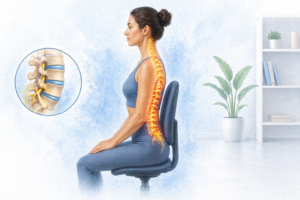
1. Sitting Posture
- Keep your back straight and shoulders relaxed
- Place feet flat on the floor
- Keep knees at hip level
- Avoid slouching or leaning forward
2. Standing Posture
- Stand upright with shoulders back
- Distribute weight evenly on both feet
- Distribute weight evenly on both feet
3. Sleeping Posture
- Use a supportive mattress and pillow
- Sleep on your back or side
- Avoid sleeping on your stomach
Stay Physically Active
Regular exercise improves flexibility, strength, and posture.
Beneficial Activities:
- Walking
- Swimming
- Yoga
- Stretching routines
These activities promote spinal health and reduce stiffness.
Lift Objects Correctly
Improper lifting is a major cause of spinal injuries.
Safe Lifting Tips:
- Bend your knees, not your back
- Keep the object close to your body
- Avoid twisting while lifting
Strengthen Core Muscles
Strong core muscles support the spine and help maintain alignment.
Recommended Exercises:
- Planks
- Bridges
- Abdominal strengthening exercises
A strong core reduces strain on the lower back.
Use Ergonomic Support
Workplace ergonomics play a significant role in spinal alignment.
Tips:
- Use an adjustable chair with lumbar support
- Position your screen at eye level
- Keep your keyboard and mouse within reach
- Take frequent breaks
Maintain a Healthy Weight
Excess weight, especially around the abdomen, increases pressure on the spine and can lead to misalignment.
Stretch Regularly
Stretching helps maintain flexibility and prevents muscle tightness that can affect alignment.
Signs of Poor Spinal Alignment
Many people are unaware that their spine is misaligned. Common signs include:
01.
Chronic back or neck pain
02.
Uneven shoulders or hips
03.
Forward head posture
04.
Rounded shoulders or Frequent headaches
05.
Muscle stiffness or fatigue
06.
Limited range of motion
If left untreated, these issues can worsen over time.
Role of Spinal Decompression in Improving Alignment
For individuals experiencing chronic pain or disc-related issues, spinal decompression therapy can play an important role in restoring proper alignment.
What Is Spinal Decompression?
Spinal decompression is a non-invasive treatment that gently stretches the spine to relieve pressure on discs and nerves.
Benefits
- Non-surgical and drug-free
- Promotes natural healing
- Improves posture and alignment
- Reduces chronic pain
How It Supports Alignment
- Reduces disc pressure
- Helps reposition bulging or herniated discs
- Improves spinal spacing
- Enhances blood flow and healing
Spinal decompression is especially beneficial for individuals with disc problems, sciatica, or chronic back pain.
Why Proper Spinal Alignment Matters
Maintaining correct spinal alignment is crucial for several reasons:
01.
Reduces Pain
Misalignment puts stress on muscles, ligaments, and joints, leading to back, neck, and shoulder pain.
02.
Improves Mobility
A well-aligned spine allows for better flexibility and range of motion.
03.
Enhances Nerve Function
The spine protects the spinal cord. Misalignment can compress nerves, leading to numbness, tingling, or weakness.
04.
Supports Better Posture
Proper alignment promotes upright posture, reducing strain on the body.
05.
Prevents Long-Term Damage
Chronic misalignment can lead to degenerative conditions such as disc problems and arthritis.
Long-Term Benefits of Proper Spinal Alignment
Maintaining proper spinal alignment offers numerous long-term advantages:
- Reduced risk of back and neck pain
- Improved posture and confidence
- Better physical performance
- Enhanced nerve function
- Increased energy levels
It also helps prevent serious spinal conditions later in life.
When to Seek Professional Help
You should consult a healthcare professional if you experience:
- Persistent back or neck pain
- Numbness or tingling
- Difficulty maintaining posture
- Limited mobility
- Pain that interferes with daily activities
Early intervention can prevent complications and improve recovery outcomes.
Prevention Tips
To maintain proper spinal alignment:
- Be mindful of posture throughout the day
- Stay active and exercise regularly
- Use ergonomic furniture
- Avoid prolonged sitting
- Take breaks and stretch often
Small daily habits can make a significant difference over time.
Conclusion
Proper spinal alignment is fundamental to a healthy, pain-free life. It supports movement, protects the nervous system, and prevents a wide range of musculoskeletal problems.
Incorporating healthy habits such as maintaining good posture, staying active, strengthening core muscles, and using ergonomic support can significantly improve spinal health. For those experiencing chronic issues, treatments like spinal decompression therapy offer an effective, non-invasive solution.
By prioritizing spinal alignment, you can enhance your overall well-being, reduce pain, and enjoy a more active and comfortable lifestyle.