
Benefits of Shockwave Therapy: How This Cutting‑Edge Treatment Can Transform Pain Management
Shockwave therapy—also known as Extracorporeal Shock Wave Therapy (ESWT)—uses controlled sound waves to stimulate healing in injured tissues. Originally developed for breaking up kidney stones, shockwave technology has now evolved into a powerful orthopaedic and musculoskeletal treatment.
Instead of cutting or masking pain with drugs, shockwave therapy stimulates the body’s own repair processes, helping tissues heal more effectively, naturally, and without surgical intervention.
What Is Shockwave Therapy?
Shockwave therapy—also known as Extracorporeal Shock Wave Therapy (ESWT)—is a non‑invasive treatment that uses sound waves to stimulate healing in injured tissues. Initially developed for breaking up kidney stones (lithotripsy), shockwave technology has since been adapted to treat musculoskeletal disorders affecting muscles, tendons, ligaments, and bones.
Instead of surgery or prolonged medication, shockwave therapy helps the body heal by stimulating its natural regenerative processes.
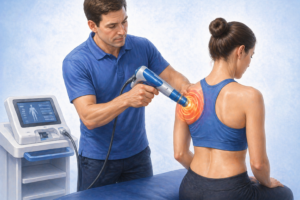
How Shockwave Therapy Works
Shockwave therapy delivers high‑energy acoustic waves into damaged areas. These waves create small mechanical stresses that:
Increase blood flow and circulation
Stimulate cellular metabolism and tissue repair
Reduce inflammation
Break down scar tissue and calcifications
Trigger release of growth factors
The overall effect is improved tissue regeneration, reduced pain, and restored function.
Unlike injections or invasive procedures, shockwave therapy does not require anesthesia and can be performed in a clinic in just minutes.
Significant Pain Relief Without Surgery
One of the most celebrated benefits of shockwave therapy is its ability to reduce pain without surgical intervention. Chronic musculoskeletal pain often requires long‑term medication or invasive procedures to manage — but shockwave therapy directly targets the source of pain instead of masking symptoms.
Pain relief occurs because shockwave therapy:
- Reduces nerve sensitivity
- Breaks down painful scar tissue
- Reduces inflammation
- Enhances healing at the cellular level
Patients often notice improvement after just a few sessions — without the risks associated with surgery.
Non‑Invasive and Safe
Shockwave therapy does not involve:
❌ Incisions
❌ Anesthesia
❌ Hospital stays
❌ Recovery downtime
This makes it a safe option for most patients looking for effective pain relief without surgery. Side effects are usually mild and temporary, such as slight redness or sensitivity at the treatment site.
Speeds Recovery After Injury
The body’s natural healing processes can be slow — especially for chronic injuries. Shockwave therapy accelerates repair by:
 Increasing oxygen and nutrient delivery
Enhancing blood circulation
Stimulating new cellular growth
Reducing chronic inflammation
Whether you’re an athlete recovering from an overuse injury or someone struggling with a persistent tendon problem, shockwave therapy supports faster and more effective healing.
Improves Mobility and Quality of Life
Pain and stiffness can severely limit movement, reduce activity levels, and negatively impact quality of life. Shockwave therapy helps restore mobility by:
- Reducing pain
- Increasing flexibility
- Breaking down restrictive adhesions
- Improving joint function
Patients often report a renewed ability to perform daily activities, exercise, or enjoy hobbies they had previously abandoned due to pain.
Helps Avoid or Delay Surgery
For many people, surgery can be intimidating — expensive, risky, and requiring weeks of recovery. Shockwave therapy offers a non‑surgical alternative that:
- Reduces pain significantly
- Improves function
- Breaks down problem tissues
- Encourages natural repair
Many patients find that they avoid or postpone surgery altogether by incorporating shockwave therapy into their treatment plan.
Minimal Side Effects
Most patients tolerate shockwave therapy well. Side effects, if any, are typically mild and temporary:
- Local redness
- Soreness for a short period
- Mild swelling that resolves quickly
Because there is no invasive component, serious complications are rare.
Works Well with Other Therapies
Shockwave therapy is often used in combination with:
✔ Physical therapy
✔ Stretching and strengthening exercises
✔ Chiropractic adjustments
✔ Lifestyle modification
✔ Heat or cold therapy
This integrative approach enhances results and supports long‑term healing.
Promotes Natural Healing
Traditional pain treatments like medications often hide pain, but they don’t help the tissue heal. Shockwave therapy works differently by stimulating the body’s own regenerative mechanisms.
When shockwaves reach injured tissues, they:
- Increase blood flow
- Trigger release of growth factors
- Encourage cell repair
- Support collagen formation
This process allows chronic injuries — which may have stagnated for months or years — to begin healing again.
Fast Treatment Sessions
Each shockwave therapy session typically lasts 10–20 minutes. Unlike lengthy rehabilitation programs or surgical recovery, shockwave therapy fits conveniently into busy schedules.
Most treatment plans involve multiple sessions over a few weeks, but patients can usually resume normal activities immediately.
Reduces Scar Tissue and Calcification
Chronic injuries often develop scar tissue or calcium deposits that limit mobility and cause ongoing pain. Shockwave therapy helps:
- Break down scar tissue
- Dissolve calcium build‑up in tendons
- Improve flexibility
- Increase range of motion
This is especially valuable for conditions like:
- Calcific tendinitis
- Chronic tendonitis
- Scarred muscle tissue
By improving tissue structure, shockwave therapy enhances both pain reduction and functional restoration.
Reduced Need for Medications
Many patients rely on long‑term medications — especially NSAIDs or pain relievers — to manage chronic discomfort. While useful, long‑term medication use also carries risks such as:
⚠ Gastrointestinal irritation
⚠ Kidney stress
⚠ Dependency issues
⚠ Masking symptoms without healing
Shockwave therapy reduces pain at its source, often lowering the need for ongoing medication.
Works for a Wide Range of Conditions
Shockwave therapy is not limited to one type of pain or injury. It has been used successfully to treat:
Tendon‑Related Conditions:
- Achilles tendinopathy
- Patellar tendon pain
- Tennis elbow
- Golfer’s elbow
Plantar and Heel Pain:
- Plantar fasciitis
- Heel spurs
Chronic Muscle and Joint Issues:
- Shoulder pain
- Lower back pain
- Hip and knee pain
Calcific Deposits:
- Calcific tendinitis in shoulder
- Calcium build‑ups in joints
This versatility makes shockwave therapy useful for both acute and chronic pain management.
What the Research Says
Research has consistently supported shockwave therapy for various musculoskeletal conditions, showing:
📌 Significant pain reduction
📌 Improved tissue structure
📌 Enhanced function
📌 High patient satisfaction
While individual outcomes vary, many clinical studies affirm that shockwave therapy is effective and safe when applied correctly.
What to Expect During and After Treatment
During Treatment
01.
You lie comfortably on a treatment table
02.
A clinician applies a handheld device to the painful area
03.
Shockwaves are delivered in controlled pulses
04.
Most sessions take 10–20 minutes
After Treatment
01.
Most patients resume normal activities immediately
02.
Some soreness may occur but typically fades
03.
Progressive improvement is noticed over weeks
Who Can Benefit Most From Shockwave Therapy?
Ideal candidates include people with:
- Chronic tendon pain
- Repetitive strain injuries
- Long‑term inflammation
- Limited mobility
- Pain lasting more than three months
- Desire to avoid surgery
However, shockwave therapy is not appropriate for everyone. It is typically avoided for:
- Active infections
- Severe nerve damage
- Blood‑clotting disorders
- Pregnancy (in treated area)
- Fractures or malignant tumors
A qualified clinical assessment helps determine whether shockwave therapy is right for you.
Conclusion: A Powerful, Natural Path to Pain Relief
Shockwave therapy offers a safe, non‑invasive, and effective way to treat musculoskeletal pain, support tissue healing, and improve overall function. By triggering the body’s natural regenerative processes and reducing pain at the source, it provides a compelling alternative to long‑term medication or invasive procedures.
Whether you’re dealing with chronic tendon pain, persistent inflammation, or mobility limitations, shockwave therapy may help you reclaim comfort and enjoy an active, pain‑free lifestyle.