
Spinal Decompression vs Surgery: Which Treatment Is Right for Your Back Pain?
Back pain caused by conditions like herniated discs, sciatica, or spinal stenosis can significantly affect your daily life. When conservative treatments fail, patients are often faced with an important decision: Should you choose spinal decompression therapy or surgery?
Both approaches aim to relieve pressure on the spine and nerves, but they differ greatly in terms of invasiveness, recovery time, risks, and long-term outcomes. Understanding these differences can help you make an informed decision about your treatment.
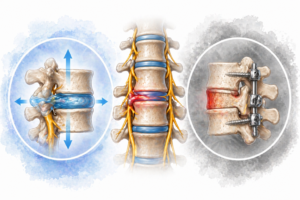
What Is Spinal Decompression?
Spinal decompression refers to techniques used to relieve pressure on spinal discs and nerves. It can be divided into two main types:
1. Non-Surgical Spinal Decompression
This is a non-invasive therapy that gently stretches the spine using specialized equipment. The goal is to create negative pressure within the discs, allowing them to retract and heal naturally.
2. Surgical Spinal Decompression
This involves surgical procedures that remove or alter parts of the spine to relieve pressure.
Common surgical procedures include:
- Discectomy (removal of part of a disc)
- Laminectomy (removal of bone to widen the spinal canal)
- Spinal fusion (joining vertebrae for stability)
Key Differences Between Spinal Decompression and Surgery
1. Invasiveness
Non-Surgical Spinal Decompression
- Completely non-invasive
- No cuts, injections, or anesthesia
- Performed in outpatient settings
Surgery
- Involves incisions and medical instruments
- Requires anesthesia
- Performed in outpMay involve implants or hardwareatient settings
👉 Verdict: Spinal decompression is far less invasive.
3. Effectiveness
Spinal Decompression Therapy
- Helps relieve pressure and promote natural healing
- Works well for mild to moderate conditions
- May reduce the need for surgery
Surgery
- Often effective for severe conditions
- Provides immediate structural relief
- However, outcomes can vary
Some patients may not experience full relief, and pain can return over time.
👉 Verdict:
- Decompression is ideal for early to moderate cases
- Surgery is better for severe or emergency conditions
5. Cost and Accessibility
Spinal Decompression
- Generally more affordable
- No hospital stay required
- Often not covered by all insurance plans
Surgery
- Expensive procedure
- Hospitalization and post-operative care increase costs
- Usually covered by insurance in medical necessity
👉 Verdict: Decompression is typically more cost-effective
2. Safety and Risks
Spinal Decompression Therapy
- Very low risk
- Possible mild soreness or stiffness
- No major complications in most cases
Spinal Surgery
Surgery carries higher risks, including:
- Infection
- Blood clots
- Nerve damage or paralysis
- Spinal fluid leaks
- Adverse reaction to anesthesia fluid leaks
👉 Verdict: Non-surgical decompression is significantly safer.
4. Recovery Time
Spinal Decompression Therapy
- Minimal downtime
- Patients can usually continue daily activities
- Treatment occurs over multiple sessions
Surgery
- Recovery can take weeks to months
- May require hospitalization and rehabilitation
- Activity restrictions are common
👉 Verdict: Spinal decompression offers much faster recovery.
6. Long-Term Impact
Spinal Decompression
- Promotes natural healing
- Does not permanently alter spinal structure
- Can be repeated if necessary
Surgery
- Permanently alters the spine
- May require additional surgeries in the future
Studies show that some patients need repeat operations or experience complications after surgery.
👉 Verdict: Decompression is less disruptive long-term.
Risks Comparison Table
|
Factor
|
Spinal Decompression
|
Surgery
|
|---|---|---|
|
Invasiveness
|
None
|
High
|
|
Risk Level
|
Low
|
Moderate to High
|
|
Recovery Time
|
Days to Weeks
|
Weeks to Months
|
|
Complications
|
Minimal
|
Infection, nerve damage
|
|
Cost
|
Moderate
|
High
|
When to Choose Spinal Decompression
Spinal decompression therapy is ideal if you:
01.
Have mild to moderate back or neck pain
02.
Suffer from herniated or bulging discs
03.
Experience sciatica or nerve compression
04.
Want to avoid surgery
05.
Prefer non-invasive treatment options
It is often recommended as a first-line treatment before considering surgery.
When Surgery May Be Necessary
Surgery may be required if you have:
- Severe or worsening symptoms
- Significant nerve damage
- Loss of bladder or bowel control
- Spinal instability or fractures
In such cases, delaying surgery could lead to permanent damage.
Can Spinal Decompression Help Avoid Surgery?
In many cases, yes. Non-surgical spinal decompression can:
- Reduce disc pressure
- Improve circulation
- Relieve nerve compression
For many patients, this eliminates the need for surgical intervention—especially when started early.
Real-World Patient Perspectives
Patient experiences often reflect mixed outcomes depending on the treatment chosen.
From online discussions:
“It depends on the severity of your pain.”
“Surgery should always be the last resort.”
These insights highlight that treatment decisions should be personalized based on the individual’s condition.
Important Considerations
Before choosing a treatment, consider:
- Severity of your condition
- Duration of symptoms
- Medical history
- Lifestyle and activity level
- Professional medical advice
A proper diagnosis through imaging (MRI, CT scan) is essential.
Conclusion
When comparing spinal decompression vs surgery, the choice ultimately depends on the severity of your condition and your personal preferences.
- Spinal decompression therapy is a safe, non-invasive, and effective option for many patients, especially in early stages.
- Surgery, while effective for severe cases, comes with higher risks, longer recovery, and greater costs.
In most situations, healthcare providers recommend trying conservative treatments—including spinal decompression—before considering surgery.
If you’re struggling with chronic back pain, exploring non-surgical options first may help you achieve relief without the risks and downtime of surgery.